Do Heucheras Multiply? A Complete Guide to Propagating Heuchera Plants

Heucheras, also known as coral bells, are popular garden plants prized for their vibrant foliage and delicate flowers. One common question among gardeners is whether these beautiful perennials can be multiplied. Propagating Heuchera plants not only allows you to expand your garden but also provides a cost-effective way to enjoy their stunning colors and textures. This complete guide will explore various methods of propagation, including division and seed collection, ensuring you have all the information needed to successfully multiply your Heucheras. Discover how to cultivate these charming plants and enhance your outdoor space with ease.
Do Heucheras Multiply?
Heucheras, commonly known as coral bells, are popular perennial plants that can multiply through several methods. They primarily propagate by producing offsets or pups, which are small plantlets that grow at the base of the parent plant. In addition, they can be propagated through division during the spring or fall when the plant is not actively flowering. By carefully separating the offsets from the main plant and replanting them in suitable soil, gardeners can easily increase their population of heucheras. Additionally, growing heucheras from seeds is another method, although this process is slower and requires specific conditions for germination.
Understanding Offsets
Offsets are small shoots that develop around the base of established heuchera plants. These offsets are genetically identical to the parent plant and can be divided and planted separately to create new plants. The best time to harvest these offsets is during the spring or early fall, when the growing conditions are optimal. By lifting the offset gently and ensuring it has a good root system, you can successfully multiply your heuchera collection with minimal effort.
Dividing Heucheras
Dividing heucheras is an effective way to multiply your plants. This method involves removing the entire clump from the ground and gently separating it into smaller sections, each containing a portion of the roots and crown. It is crucial to do this when the plants are not in bloom to avoid stress. After division, the new sections should be replanted immediately in well-drained soil to encourage growth. This technique not only increases the number of plants but also can rejuvenate older heucheras that may have become overcrowded.
Growing Heucheras from Seeds
While growing heucheras from seeds is less common, it is a viable method for multiplication. Seeds should be sown in late winter or early spring in a well-draining potting mix. A warm, bright environment is essential for successful germination, taking about two to three weeks. However, growing from seeds can lead to variations in color and form, unlike propagation through offsets, which produces clones of the parent.
Optimal Conditions for Multiplication
Creating the ideal conditions for heucheras can significantly enhance their multiplication. Heucheras thrive in partial shade to full shade and require well-draining soil to prevent root rot. Maintaining consistent moisture, particularly during dry spells, encourages healthy growth and offsets. Additionally, using a balanced fertilizer in early spring can promote vigorous growth, resulting in more offsets or pups for propagation.
Common Problems During Propagation
Propagation of heucheras is generally straightforward, but certain issues can arise. Problems such as overwatering, poor soil drainage, or insufficient light can affect the health of the plants and limit their ability to produce offsets. Pests like aphids or fungal issues can also hinder growth. Regularly monitoring your plants and ensuring they are in a suitable environment can help prevent such problems and support successful multiplication.
| Multiplication Method | Description | Best Time to Implement |
|---|---|---|
| Offsets | Small plantlets growing at the base of the parent plant. | Spring or Fall |
| Division | Separating clumps into smaller sections with roots. | Spring or Fall |
| Seeds | Growing new plants from seeds collected from flowers. | Late Winter or Early Spring |
How fast does heuchera spread?
:strip_icc()/purple-palace-coralbells-heuchera-2af3c0c3-775561fbb7d440628cfd2aa9e14ab616.jpg)
Heuchera, commonly known as coral bells, are popular perennial plants appreciated for their colorful foliage and versatility in shading landscapes. When considering their spread rate, several factors come into play, including the specific variety, growing conditions, and the care provided. Generally, Heuchera can spread between 1 to 2 feet in width over a span of 3 to 5 years.
Their growth is influenced by the following conditions:
- Soil Quality: Well-drained, rich soil promotes better growth.
- Watering Needs: Adequate moisture supports healthier plants.
- Sunlight Exposure: Varieties differ in their light preferences affecting their spread.

Below are the related subtopics concerning how fast Heuchera spreads:
Factors Affecting Heuchera Spread Rate
The spread rate of Heuchera is influenced by several factors:
- Soil Type: The fertility and drainage of the soil can significantly affect root and foliage growth.
- Watering Frequency: Consistent moisture without over-watering is crucial for optimal spread.
- Light Conditions: Depending on the variety, the amount of sunlight can either hinder or enhance growth.
Recommended Spacing for Planting Heuchera
Proper spacing during planting can enhance the growth and spread of Heuchera:
- Single Planting: Space plants about 18 to 24 inches apart for ample room to spread.
- Mass Planting: If creating a ground cover, plant 12 to 18 inches apart.
- Interplanting: Use Heuchera alongside other perennials to create a mixed planting effect while taking care of their spread.
Seasonal Growth Patterns of Heuchera
Understanding seasonal growth can help in predicting the spread of Heuchera:
- Spring Growth: Heuchera typically experiences a burst of growth in spring as temperatures rise.
- Summer Maintenance: It continues to grow, albeit slower, in the heat of summer with proper care.
- Fall Dormancy: As temperatures cool, growth slows down significantly, indicating a shift to dormancy.
Types of Heuchera and Their Growth Rates
Different varieties of Heuchera have varying growth rates:
- Heuchera 'Caramel': Known for its fast spread, can quickly fill a space.
- Heuchera 'Palace Purple': Moderately spreads, taking a few years to reach maturity.
- Heuchera 'Lime Rickey': Offers vibrant color and spreads at a moderate rate.
Care Tips to Enhance Heuchera Spread
Proper care enhances the ability of Heuchera to spread effectively:
- Regular Fertilization: Using a balanced fertilizer during the growing season supports healthy growth.
- Pruning: Removing dead leaves and spent blooms helps redirect energy to new growth.
- Pest Management: Keeping an eye out for pests ensures plants aren't hindered in their growth capacity.
How do you multiply heuchera?
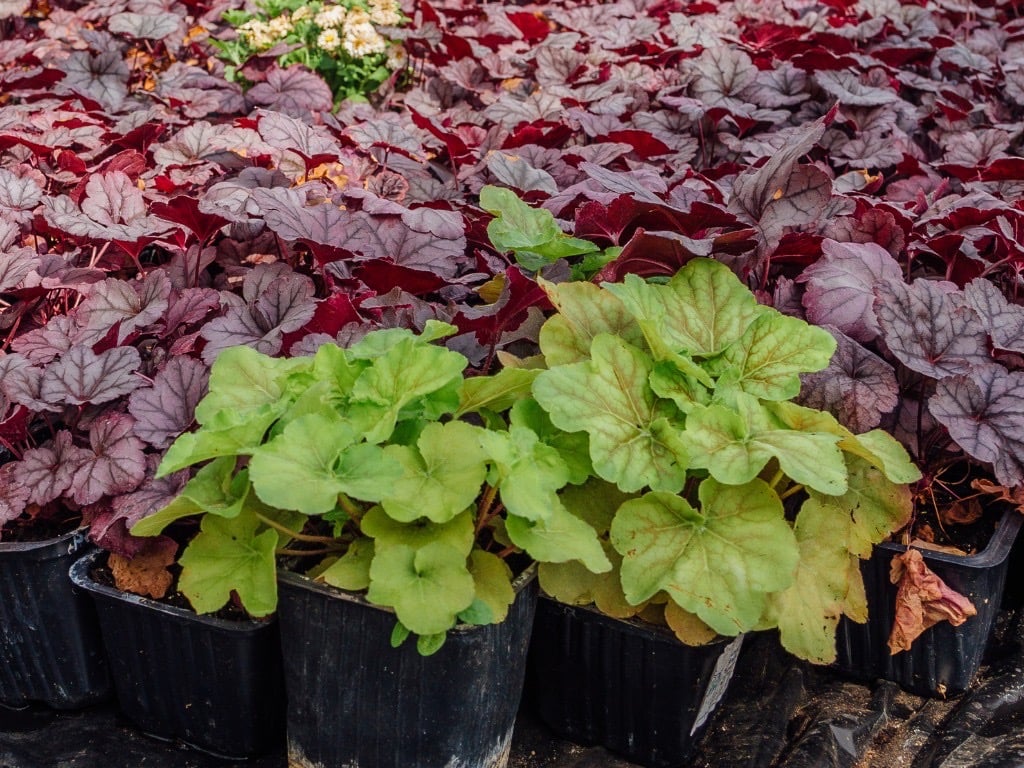
To multiply heuchera, which is also known as coral bells, you can use several methods including division, seed propagation, and cuttings. Here’s a detailed explanation of each method:
Dividing Heuchera Plants
Dividing heuchera is one of the most effective methods for multiplication, especially for mature plants. The process involves separating the plant into smaller clumps, which can then be replanted.
- Choose the Right Time: The best time to divide heuchera is in early spring or fall when the plant is actively growing or going dormant.
- Prepare the Tools: Use a sharp garden spade or a knife. Ensure they are clean to avoid infection.
- Dig Up the Plant: Gently dig around the base of the plant, lifting it out of the soil with care to avoid damaging the roots.
- Separate the Clumps: Carefully pull apart the plant into smaller sections, ensuring each division has adequate roots.
- Replant: Plant the divisions in well-draining soil, water them thoroughly, and provide some shade until they establish.
Seed Propagation of Heuchera
Propagation through seeds is another way to multiply heuchera, although it may take longer for the plants to mature compared to other methods.
- Collect Seeds: Gather seeds from mature heuchera plants once the seed pods are dry and brown.
- Prepare Seed Beds: Use a seed-starting mix in small trays or pots with good drainage.
- Sow Seeds: Sprinkle seeds on the surface of the soil and cover lightly as they require light to germinate.
- Provide Moisture: Keep the soil moist but not soggy, and place the trays in a location with indirect sunlight.
- Transplant Seedlings: Once seedlings are large enough to handle, transplant them into individual pots or directly into the garden.
Using Stem Cuttings
Taking stem cuttings is another viable method for multiplying heuchera, particularly for specific varieties.
See also:
- Select Healthy Stems: Choose non-flowering stems that are healthy and free from disease.
- Cut the Stems: With clean scissors, cut a section of the stem that is about 4-6 inches long, just below a leaf node.
- Prepare the Cuttings: Remove the lower leaves, leaving a few leaves at the top, to reduce moisture loss.
- Root the Cuttings: Place the cuttings in a glass of water or in moist soil to encourage root development.
- Transplant Once Rooted: After a few weeks, once roots have developed, transplant the cuttings into pots or the garden.
Choosing the Right Growing Conditions
The success of multiplying heuchera also greatly depends on creating the right growing conditions for the new plants.
- Soil Requirements: Heuchera thrives in well-draining soil rich in organic matter. Amend your soil with compost to improve nutrient content.
- Light Exposure: While heuchera can tolerate some shade, providing them with partial sunlight can enhance their color and growth.
- Watering Needs: Newly propagated heuchera requires consistent moisture; avoid overwatering which can lead to root rot.
- Fertilization: A balanced fertilizer applied in the growing season can promote healthy growth and vibrant foliage.
- Temperature Considerations: Heuchera prefers moderate temperatures, so protect them from extreme heat or cold.
Pest and Disease Management
Proper care and monitoring for pests and diseases are crucial to ensure healthy growth of propagated heuchera.
- Inspect Regularly: Check plants frequently for signs of pests such as aphids, slugs, or spider mites.
- Use Natural Remedies: Implement organic solutions like neem oil or insecticidal soap to control pest populations.
- Promote Air Circulation: Space plants appropriately to prevent overcrowding and reduce the risk of fungal diseases.
- Remove Affected Leaves: If any leaves show signs of disease, remove and dispose of them immediately to prevent spread.
- Maintain Healthy Plants: Keeping heuchera well-fed and watered will help them resist diseases and pests more effectively.
What is the heuchera problem?

The Heuchera problem refers to a specific challenge encountered when dealing with computational geometry, particularly in the field of geometric intersection problems. The term is derived from the attempts to optimally place Heuchera plants in a garden layout while considering their highly variable sizes and shapes. This problem, however, is not restricted to horticulture and can be abstracted to various domains in computer science, especially in the representation and manipulation of geometric data.
Theoretical Background
Understanding the Heuchera problem requires insight into the principles of computational geometry. This area of study focuses on the algorithms and theories that manage geometric objects, such as points, lines, and polygons. The Heuchera problem illustrates how complex the intersection of different geometric figures can become, especially in scenarios where precise arrangements are critical.
- Geometric Arrangement: Organizing multiple geometric objects in a space.
- Intersection Algorithms: Algorithms to determine how shapes overlap.
- Complexity Analysis: Evaluating how challenging the problem is in terms of computational resources.
Applications of the Heuchera Problem
The concept of the Heuchera problem transcends gardening and finds applicability in several fields. Areas such as robotics, computer graphics, and urban planning frequently encounter similar geometric problems, where optimal spatial distribution is crucial.
- Robotics: Path planning for navigating robots around obstacles.
- Computer Graphics: Rendering shapes and managing colliding geometries.
- Urban Planning: Efficient layout of buildings and green spaces in cities.
Mathematical Models Employed
Various mathematical models are utilized to analyze and solve the Heuchera problem. These models help predict and streamline the interactions between different objects in geometry, leading to more efficient solutions.
- Graph Theory: Utilizes vertices and edges to model relationships between geometric entities.
- Convex Hulls: Helps in defining the primary boundaries of geometric shapes.
- Voronoi Diagrams: Divides spaces into distinct regions based on point proximity.
Challenges Faced in Solving It
One of the major challenges in addressing the Heuchera problem lies in the computational complexity of the solutions. As the number of geometric figures increases, the difficulty of correctly determining their intersections and optimal arrangements escalates as well.
- Size Variability: Differing dimensions between objects complicate boundary calculations.
- Shape Irregularities: Non-standard shapes can hinder straightforward geometric operations.
- Resource Limitations: Memory and processing power constraints can limit algorithm execution capabilities.
Future Research Directions
Research surrounding the Heuchera problem is continuously evolving, focusing on refining algorithms and reducing computational overhead. Innovations in data structures and machine learning are poised to significantly alter the landscape of how these geometric problems are approached.
- Algorithm Optimization: Developing faster and more efficient algorithms for solution finding.
- Machine Learning Integration: Exploring AI methodologies for predictive modeling in geometry.
- Advanced Computational Models: Testing new frameworks that could better handle complex operations.
Questions from Our Readers
Do heucheras multiply?
Heucheras, also known as coral bells, do indeed multiply over time. They primarily do so through clumping, where new shoots emerge from the base of the plant, creating more plants in the process.
How does heuchera propagation work?
Heuchera propagation occurs mainly through division of clumps. This involves carefully separating the established plant into smaller sections, each with roots and foliage, allowing them to grow individually in new locations.
See also:
When is the best time to divide heucheras?
The best time to divide heucheras is during early spring or fall. This timing ensures that the plants are not under stress and can establish their roots in the soil more effectively after being divided.
Can heucheras be grown from seeds?
Yes, heucheras can be grown from seeds, although it is less common than propagating through division. Seed propagation can be more challenging, requiring patience and the right conditions for germination to be successful.

If you want to read more articles like Do Heucheras Multiply? A Complete Guide to Propagating Heuchera Plants, we recommend you check out our Heuchera category.
Leave a Reply
Related Articles