Is a Sunflower a Spiral? Exploring the Unique Patterns of Nature's Iconic Flower

Sunflowers are more than just vibrant symbols of summer; they are fascinating subjects for exploration in the realm of mathematics and nature. The spiral patterns found in sunflower heads are not only beautiful but also reflect the underlying principles of geometry and growth. These patterns arise from the arrangement of seeds, known as phyllotaxis, which optimizes space and resource allocation. In this article, we delve into the intriguing question: Is a sunflower a spiral? We will uncover the unique mathematical structures that define this iconic flower and examine how they relate to broader concepts in nature.
Is a Sunflower a Spiral?
Yes, a sunflower exhibits a fascinating natural pattern known as a spiral arrangement. This spiral is most evident in the arrangement of the seeds in the flower's head, which follows the Fibonacci sequence. In this sequence, each number is the sum of the two preceding ones, and the growth pattern of sunflowers uses this mathematical principle to maximize seed packing efficiency. The organization allows for optimal exposure to sunlight and rain, enhancing the plant's overall growth and reproductive success.
Understanding the Fibonacci Sequence in Sunflowers
The Fibonacci sequence is a series of numbers where each number is the sum of the two preceding ones, typically starting with 0 and 1. In sunflowers, the number of spirals in different directions can often be found to be Fibonacci numbers, such as 21 and 34. This pattern can be observed by counting the spirals in both directions, emphasizing the mathematical beauty present in nature and the evolutionary advantage these arrangements provide for seed development.
The Role of Spirals in Plant Growth
Spirals in sunflowers serve several crucial functions. This arrangement enables the plant to pack seeds more efficiently, increasing the number of seeds that can develop without competing for resources. The spiral formation also optimizes access to sunlight, as each seed has its own space to grow, which enhances photosynthesis and ultimately the overall vitality of the sunflower.
Natural Patterns and Their Significance
The presence of spirals in nature is not limited to sunflowers; it can be observed in many organisms and natural formations. These patterns can be found in pinecones, pineapples, and even galaxies. The significance of spirals in these contexts often relates to efficiency and structure, as they allow for optimal use of space and resources, contributing to survival and reproduction.
Spiral Phyllotaxis in Sunflowers
The specific arrangement of seeds in sunflowers is an example of phyllotaxis, which is the study of the arrangement of leaves on a stem or seeds in a flower. In sunflowers, the seeds grow in concentric circles that create an intricate spiral pattern, helping the plant to maximize space and nutrition availability. This biological design is integral to the species' physical and reproductive success.
The Aesthetic Appeal of Spiral Patterns
Many people are drawn to the aesthetic appeal of spirals found in sunflowers. The spirals create a visually pleasing arrangement that is often associated with beauty and harmony in nature. Artists, mathematicians, and nature enthusiasts alike appreciate these patterns, which can inspire creativity and further exploration into the connections between math and art in the natural world.
| Aspect | Description |
|---|---|
| Fibonacci Sequence | A series where each number is the sum of the two preceding ones, relevant in sunflower growth. |
| Spiral Efficiency | Spiral arrangement allows optimal seed packing and resource utilization. |
| Phyllotaxis | The study of leaf and seed arrangement, key to sunflower's design. |
| Aesthetic Value | Spirals provide visual beauty, influencing art and design. |
| Natural Patterns | Spirals are found in many forms throughout nature, representing efficiency. |
Is sunflower a spiral pattern?
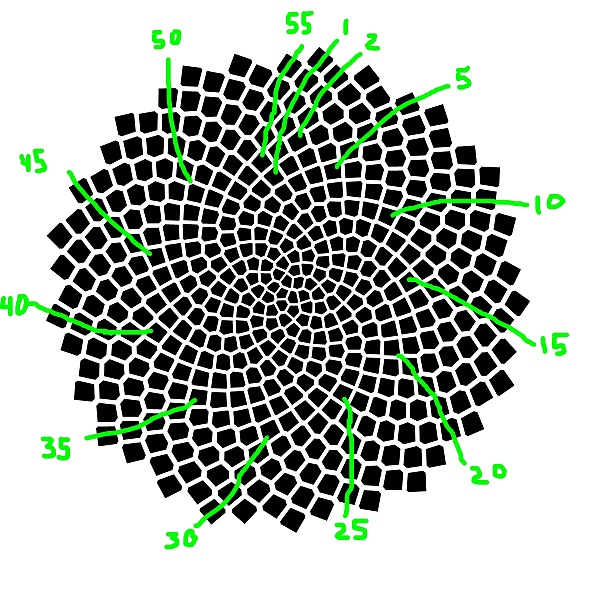
Yes, sunflowers exhibit a remarkable spiral pattern, which is a manifestation of a mathematical arrangement known as the Fibonacci sequence. This spiral pattern can be observed in the arrangement of seeds in the sunflower's head, where the seeds are positioned in a way that maximizes the space and allows for optimal growth. The Fibonacci sequence is formed by a series of numbers where each number is the sum of the two preceding ones. This results in a logarithmic spiral pattern that is both efficient and aesthetically pleasing.
What is the Fibonacci Sequence?
The Fibonacci sequence is a series where each number is the sum of the two preceding ones, typically starting with 0 and 1. This sequence reveals how natural patterns often conform to mathematical principles. In relation to sunflowers, the number of spirals in either direction—clockwise and counterclockwise—often corresponds to Fibonacci numbers.
- The sequence starts: 0, 1, 1, 2, 3, 5, 8, 13, 21, etc.
- It can be observed in various natural phenomena, such as leaf arrangements and flower petal counts.
- In sunflowers, the arrangement of seeds typically follows the Fibonacci sequence, promoting optimal seed packing.
How Do Spiral Patterns Form in Sunflowers?
The spiral patterns in sunflowers arise during the development of the flower head. The growing point generates new seed structures in a way that maximizes efficiency and light exposure. This growth principle is rooted in mathematical relationships that optimize the placement of seeds for the best possible nutrient acquisition and space.
See also:
- As each seed develops, it follows a specific angle to influence its positioning.
- This angular disposition leads to the characteristic spiral formation.
- Each new seed emerges at an angle that is approximately 137.5 degrees from the previous one, optimizing packing.
The Role of Phyllotaxis in Sunflowers
Phyllotaxis refers to the arrangement of leaves on a stem or seeds in a flower head. In sunflowers, phyllotactic patterns ensure that each seed has the best chance of receiving sunlight and moisture while avoiding competition with neighboring seeds. This arrangement is crucial for the survival and growth of the sunflower.
- Each sunflower head can contain hundreds or thousands of seeds, each benefiting from optimized spacing.
- The arrangement reduces overlapping, which can inhibit individual seed growth.
- This pattern results in efficient utilization of space and resources within the flower head.
Visual Characteristics of Spiral Patterns in Sunflowers
The visual beauty of sunflower spirals lies in their intricate and orderly arrangement of seeds. This characteristic enhances their appeal and has captivated botanists and mathematicians alike. The aesthetics are a byproduct of functional growth, which is why sunflowers are often highlighted in discussions about natural beauty and mathematics.
- The spirals can often be counted in both clockwise and counterclockwise directions, revealing Fibonacci numbers.
- Observing this pattern can provide insight into the sunflower's reproductive success.
- The symmetry and order of the spiral enhance the sunflower’s visual appeal, attracting pollinators.
Other Plants That Exhibit Spiral Patterns
While sunflowers are well-known for their spiral seed arrangement, they are not alone in this characteristic. Other plants also display similar patterns, showcasing the prevalence of the Fibonacci sequence across the plant kingdom. Understanding these patterns can lead to broader insights into botanical growth and organization.
- Pinecones display spirals of seeds that follow the Fibonacci sequence, similar to sunflowers.
- The arrangement of leaves on a stem in various plant species often follows this mathematical rule.
- Other flowering plants, such as daisies, exhibit similar seed arrangement patterns that align with Fibonacci numbers.
Are sunflowers associated with spirals?

Yes, sunflowers are indeed associated with spirals, specifically in the arrangement of their seeds. The pattern of sunflower seeds displays a fascinating phenomenon known as the Fibonacci sequence, which is closely tied to the occurrence of spirals in nature.
When examining the seed arrangement in a sunflower head, one can observe that seeds are packed in a spiral formation, allowing for a maximum number of seeds to be stored within a confined space. This packing strategy not only optimizes growth but also provides a beautiful visual representation of mathematical principles in nature. The number of spirals in each direction often corresponds to Fibonacci numbers, adding to the intriguing complexity of their structure.
Understanding the Fibonacci Sequence in Sunflowers
The Fibonacci sequence is a series of numbers where each number is the sum of the two preceding ones, typically starting with 0 and 1. In the case of sunflowers, this sequence can be observed in the arrangement of seeds.
- The first few Fibonacci numbers are 0, 1, 1, 2, 3, 5, 8, 13, and so on.
- Sunflowers commonly display 34 right-hand spirals and 55 left-hand spirals, which are consecutive Fibonacci numbers.
- This pattern contributes to the efficiency of seed packing, maximizing exposure to environmental resources.
Mathematical Significance of Spirals
The spiral pattern seen in sunflower seeds is not only visually appealing but also mathematically significant. The arrangement exploits geometry and growth optimization.
- Spirals allow for a high density of seeds without overcrowding, facilitating optimal growth.
- This mathematical efficiency is a common phenomenon observed across various plant species.
- Mathematics and biology intertwine, revealing the underlying principles of nature's design.
Role of Phyllotaxis in Sunflower Growth
Phyllotaxis refers to the arrangement of leaves or seeds around a stem or flower head. In sunflowers, it plays a crucial role in the spiral arrangement.
- Phyllotaxis influences how sunlight and rain are distributed among seeds.
- The spiral arrangement reduces shadowing of seeds, promoting better growth.
- This phenomenon illustrates how plants have evolved efficient strategies for survival and reproduction.
Spirals in Nature
Spirals are prevalent in various aspects of nature, not just in sunflowers. They appear in countless biological forms, reflecting a fundamental natural design principle.
- Examples include galaxies, shells, hurricanes, and pinecones, emphasizing the ubiquity of spirals.
- These patterns highlight efficiency and adaptability in living organisms.
- Understanding these patterns enhances our appreciation of the complexity and interconnectivity of life.
Implications for Science and Art
The relationship between spirals and sunflowers has implications beyond biology. It influences fields such as art, architecture, and design.
See also:
- Artists and architects often draw inspiration from natural spirals to create aesthetically pleasing works.
- The Golden Ratio, derived from the Fibonacci sequence, is frequently used in art and design.
- This intersection of science and art reveals how fundamental patterns in nature can influence human creativity.
Which is the shape of a sunflower?
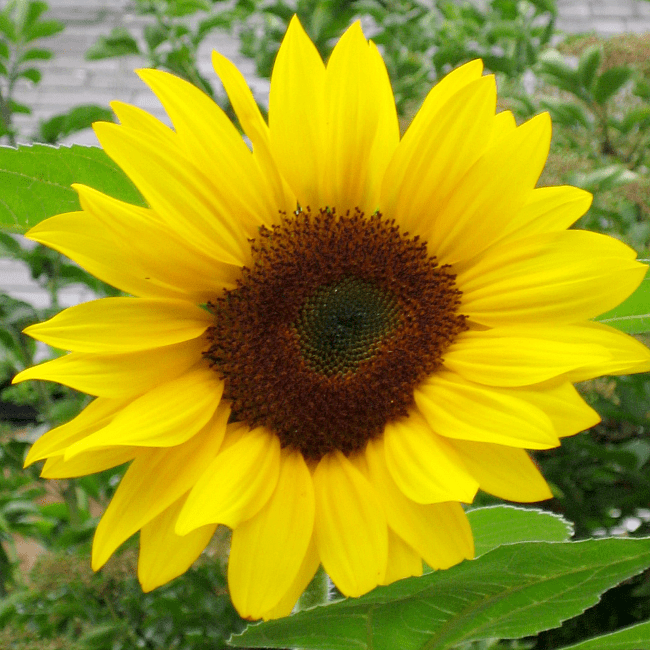
The shape of a sunflower is notably characterized by its distinctive disc-shaped flower head, which is comprised of numerous small flowers known as florets that are arranged in a spiral pattern. The overall appearance of a sunflower can be described as circular, with a central disk surrounded by bright yellow petals. This unique structure not only makes sunflowers visually striking but also plays a crucial role in their reproduction by attracting pollinators.
Physical Structure of Sunflower
The physical structure of a sunflower is pivotal to its identification and functionality. Each sunflower can be divided into several key components:
- Petals: The outer yellow petals are broad and usually arranged in a single layer around the core.
- Disc Florets: The central part of the sunflower contains tiny, tubular florets which are densely packed and can resemble a fuzzy ball.
- Seeds: Each floret can develop into a seed after pollination, contributing to the overall circular shape in a mature sunflower.
Symmetry and Spiral Patterns
Sunflowers exhibit a remarkable degree of symmetry, primarily characterized by their spiral arrangement of seeds within the disk florets. This includes:
- Fibonacci Sequence: The arrangement often follows the Fibonacci pattern, maximizing seed packing efficiency.
- Golden Angle: The florets are positioned at an angle of approximately 137.5 degrees from each other for optimal exposure to sunlight.
- Highly Symmetrical: The overall sunflower has a high degree of radial symmetry, making it appear uniform from all sides.
Growth Orientation and Helio-tropism
Sunflowers exhibit a behavior known as heliotropism, which affects their shape during the growth phase. This involves:
- Tracking the Sun: Younger sunflowers tend to face the sun as it moves across the sky, which impacts their growth orientation.
- Initial Bud Shape: Before blooming, sunflowers have a bud shape that gradually opens to a wide, flat disc when matured.
- Final Orientation: Mature sunflowers generally face east, enhancing their ability to attract pollinators.
Size Variations Among Sunflowers
Sunflowers can vary considerably in size, which influences their overall shape. Key aspects include:
- Height Variability: Some sunflowers can grow up to 10 feet tall, while dwarf varieties may only reach 1-2 feet.
- Head Diameter: The size of the flower head can range from a small 3 inches to over a foot in diameter.
- Branch Patterns: Depending on the variety, sunflowers may have multiple branches that contribute to a more complex shape.
Symbolism of Shape in Culture
The shape of the sunflower also holds significant cultural symbolism which includes:
- Sun Symbolism: The round, sun-like shape represents warmth, positivity, and happiness in various cultures.
- Artistic Inspiration: Artists have frequently used the sunflower shape in paintings and designs, with notable works by Van Gogh.
- Spiritual Meaning: Some cultures view the sunflower's shape as a symbol of fidelity and longevity.
Questions from Our Readers
Is a sunflower a spiral?
Yes, a sunflower exhibits a spiral pattern in its seed arrangement. This characteristic is a result of the Fibonacci sequence, which leads to efficient packing and optimal sunlight exposure for the seeds.
How do spirals in sunflowers benefit their growth?
The spirals allow for a maximum number of seeds to fit in the available space, which means more potential flowers can grow. This arrangement helps the sunflower to be more productive and enhances its chances of survival in the wild.
What mathematical concept is associated with sunflower spirals?
The spiral pattern in sunflowers is related to the Fibonacci sequence, where each number is the sum of the two preceding ones, creating an efficient growth pattern. This mathematical concept is reflected in the number of spirals in either direction, typically showing a notable ratio.
Can sunflowers have different types of spirals?
Yes, aside from the typical clockwise and counter-clockwise spirals created by their seeds, sunflowers can exhibit varying spiral arrangements depending on their genetic makeup and environmental conditions, leading to different overall aesthetics.
See also:

If you want to read more articles like Is a Sunflower a Spiral? Exploring the Unique Patterns of Nature's Iconic Flower, we recommend you check out our Flowers category.
Leave a Reply
Related Articles