What is the First Rule of Composting? A Comprehensive Guide to Start Composting Effectively

Composting is a sustainable practice that transforms organic waste into valuable soil conditioner, enriching gardens and reducing landfill waste. For beginners, understanding the foundational principles of composting is essential to achieving effective results. The first rule of composting often dictates the success of your composting journey: balance. This comprehensive guide will not only explore this crucial rule but will also provide practical tips and insights on how to start composting effectively. By following the right steps and maintaining an ideal environment, you can contribute to a healthier planet while nourishing your plants with nutrient-rich compost.
What is the First Rule of Composting?
The first rule of composting is to maintain a balance between green and brown materials in your compost pile. Green materials, which are rich in nitrogen, include kitchen scraps like fruit and vegetable peels, coffee grounds, and grass clippings, while brown materials, which provide carbon, consist of dried leaves, cardboard, and straw. This balanced mix is essential for the microorganisms that break down organic matter, ensuring the composting process occurs efficiently and effectively. If the ratio is off, the compost may smell unpleasant or take longer to decompose, so understanding how to layer these materials is crucial for successful composting.
The Importance of Green Materials
Green materials are critical in composting because they supply the necessary nitrogen that stimulates the growth of microbes, which are vital for decomposition. They are typically moist and rich in nutrients, which help accelerate the composting process. Examples include vegetable scraps, coffee grounds, and fresh grass clippings. Properly incorporating enough green materials will help ensure that the compost pile heats up, promoting efficient breakdown and reducing the time required for the compost to mature.
Understanding Brown Materials
Brown materials play an important role in composting by providing the necessary carbon that fuels the energy needs of microorganisms during the composting process. These materials are generally dry and include items like dry leaves, straw, shredded newspaper, and cardboard. Having a sufficient amount of brown materials not only balances the nitrogen-rich green materials but also helps to improve aeration in the compost pile, preventing it from becoming too compacted, which could limit air flow and slow down the decomposition process.
Achieving the Right Ratio
To achieve optimal composting results, a commonly recommended ratio is about 3 parts brown materials to 1 part green materials. This ratio ensures that the compost pile has enough carbon to support the energy requirements of the microorganisms while also providing adequate nitrogen for growth. However, this ratio can vary depending on the specific materials used and their respective moisture levels, so it's important to monitor your pile and make adjustments as needed to maintain efficiency in the composting process.
The Role of Aeration
Aeration is essential in composting because it ensures that oxygen reaches the microorganisms that are breaking down the organic matter. When you turn or mix your compost pile, you introduce air, which helps speed up the decomposition process and prevents the pile from becoming anaerobic, which can lead to unpleasant odors. Keeping a balance between green and brown materials also contributes to good aeration, as the different textures of these materials create air pockets within the pile.
Monitoring Moisture Levels
In addition to balancing green and brown materials, weekly monitoring of moisture levels is crucial for successful composting. The compost pile should be kept damp, similar to a wrung-out sponge, to provide the right environment for the microorganisms to thrive. Too much moisture can lead to anaerobic conditions and foul smells, whereas insufficient moisture can dry out the materials, slowing the decomposition process. Adjust the moisture levels through watering or adding dry materials as necessary to maintain a proper balance.
| Material Type | Examples | Nutrient Type |
|---|---|---|
| Green | Fruit scraps, vegetable scraps, coffee grounds | Nitrogen |
| Brown | Dried leaves, cardboard, straw | Carbon |
What is the first thing to put in a compost bin?
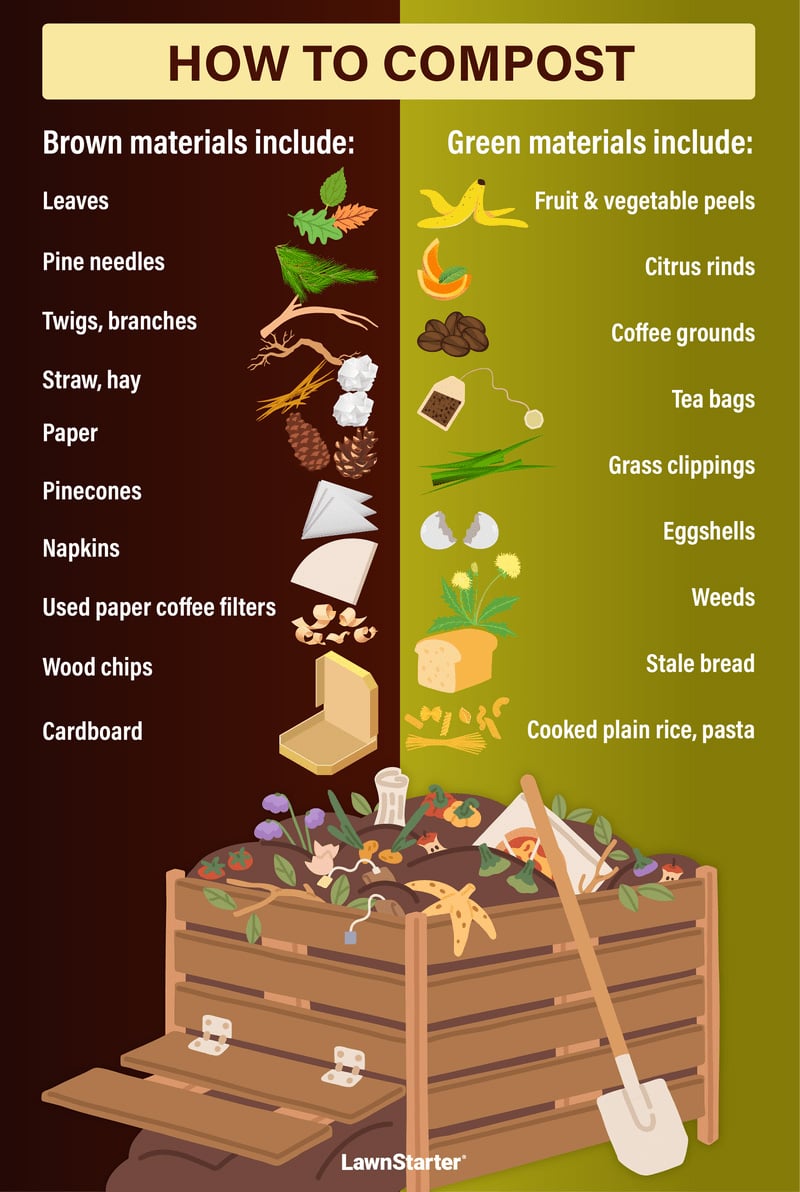
The first thing to put in a compost bin is usually a good mix of browns and greens. Browns are carbon-rich materials, while greens provide nitrogen. Starting with a combination of these materials lays a solid foundation for microbial activity that helps break down the compost. A common initial choice for many people is to begin with shredded leaves or dry twigs as browns, combined with kitchen scraps such as vegetable peels or coffee grounds as greens.
Understanding Browns and Greens
Browns and greens are fundamental components of a healthy compost environment. Understanding their roles can help you effectively manage your compost bin.
See also:
- Browns: These are dry materials high in carbon, such as dried leaves, straw, and cardboard.
- Greens: These are moist materials high in nitrogen, like grass clippings, vegetable scraps, and coffee grounds.
- Balancing both types ensures efficient decomposition and prevents unpleasant odors.
Choosing the Right Browns
Selecting the right type of browns is crucial for creating effective compost. Different materials contribute unique benefits.
- Dry Leaves: They are abundant in fall and can easily be shredded to improve airflow in the compost.
- Cardboard: When shredded, it introduces carbon and creates space for air circulation.
- Pine Needles: They can be used but should be in moderation due to their acidity.
Choosing the Right Greens
The choice of greens you include can significantly affect the nutrient levels of your compost. Fresh materials are vital for a successful composting process.
- Fruit and Vegetable Scraps: These add moisture and nutrients but should be chopped for faster decomposition.
- Coffee Grounds: They introduce not only nitrogen but also beneficial microorganisms.
- Grass Clippings: They decompose quickly but should be mixed with browns to prevent clumping.
Layering Your Compost
Layering is an effective technique to optimize the composting process. It allows for a better balance of air and moisture.
- Start with a Layer of Browns: This helps to absorb excess moisture and provides aeration.
- Add a Layer of Greens: Distribute them evenly to promote microbial activity.
- Repeat Layers: Continue alternating browns and greens in equal parts for balanced compost.
Monitoring Moisture Levels
Moisture content is a critical factor in composting. Too much or too little can hinder the decomposition process.
- Ideal Moisture Content: The compost pile should have the consistency of a damp sponge.
- Adjustment Techniques: If too wet, add more browns; if too dry, add some water or more greens.
- Regular Checks: Monitor your compost periodically to ensure it maintains the right moisture levels during decomposition.
Do coffee grounds speed up composting?

Coffee grounds can indeed play a significant role in speed up composting. They are a valuable addition to compost piles due to their high nitrogen content, which is essential for microbial activity. When composting, maintaining a proper balance of carbon (browns) and nitrogen (greens) is crucial. Coffee grounds are considered greens in the composting process.
High Nitrogen Content in Coffee Grounds
Coffee grounds contain approximately 2% nitrogen, making them a superb source of this essential nutrient for composting. Their rich nitrogen content accelerates microbial activity, thus speeding up the decomposition process.
- Nitrogen promotes the reproduction of microorganisms.
- Microorganisms break down organic materials faster.
- This leads to a more efficient composting process overall.
Balancing Carbon to Nitrogen Ratio
For effective composting, it is vital to maintain the right carbon to nitrogen (C:N) ratio. Coffee grounds, being predominantly nitrogen, should be balanced with carbon-rich materials such as dry leaves, straw, or cardboard.
- The ideal C:N ratio for composting is around 30:1.
- Adding coffee grounds helps adjust low nitrogen levels in the compost.
- Balancing these materials enhances microbial growth and decomposition speed.
Water Retention Properties
Coffee grounds improve the water retention of compost mixtures. They help to retain moisture, which is essential for the microorganisms that break down organic matter.
- Enhanced moisture aids in microbial activity.
- Proper moisture prevents the compost pile from drying out.
- It ensures consistent temperatures, which facilitates anaerobic and aerobic decomposition.
Inoculation of Beneficial Microbes
Coffee grounds can attract beneficial microbes to the compost heap, which are vital for effective decomposition. These microbes help in breaking down tough organic materials.
See also:
- Beneficial microbes outcompete harmful pathogens.
- They enhance the breakdown of organic materials.
- This leads to a quicker and more efficient composting process.
Potential pH Adjustment
Coffee grounds have a slightly acidic pH, which can affect the overall pH levels of the compost. While extreme acidity can be detrimental, the right amount of coffee grounds can help balance the pH depending on the other materials present.
- Moderate acidity can benefit certain plants in the garden.
- Balancing pH contributes to overall soil health.
- Understanding pH levels allows for better compost management.
What is the first step of composting?

The first step of composting is to choose the right location for your compost pile or bin. This is crucial as it influences the efficiency of the composting process. A well-chosen site can help in maintaining optimal moisture and temperature levels, and it can also make the composting process more convenient for regular maintenance and monitoring.
Understanding Composting Basics
The process of composting involves breaking down organic materials into a nutrient-rich substance called compost. To start composting effectively, it's essential to understand the basic principles behind the decomposition of organic matter.
- Microorganisms: These tiny organisms are the backbone of composting. They break down food scraps, yard waste, and other organic materials.
- Aerobic Conditions: Composting generally requires oxygen, which helps in the formation of healthy compost.
- Balance of Materials: A good compost mix has a balance of green materials (rich in nitrogen) and brown materials (rich in carbon).
Choosing the Right Location
Selecting the right spot for your composting endeavor is vital to ensuring that it is both efficient and manageable. Consider a location that is easily accessible and has adequate drainage to prevent the compost pile from becoming waterlogged.
- Sunlight: A sunny area can help to maintain warmth, speeding up the composting process.
- Proximity: Keep the compost bin close to your kitchen or garden to facilitate easy access for adding materials.
- Drainage: Ensure the spot has good drainage to avoid standing water, which can lead to odor issues and hinder decomposition.
Gathering Compost Materials
Once the location is established, the next step is to gather the appropriate materials for composting. A well-balanced mixture will facilitate the rapid breakdown of organic matter.
- Green Materials: These include kitchen scraps like vegetable peels and coffee grounds, which provide nitrogen.
- Brown Materials: These consist of dry leaves, straw, and cardboard that add carbon to the mix.
- Avoiding Problematic Items: Do not include meat, dairy, or oils, which can attract pests and create odors.
Building Your Compost Pile or Bin
After gathering materials, the next step is to construct the actual compost pile or bin. This structure will contain and facilitate the decomposition of the materials.
- Layering: Start with coarse brown materials at the bottom to ensure airflow, then alternate layers of green and brown materials.
- Volume: Aim for a pile that is at least 3 feet by 3 feet to retain heat and moisture effectively.
- Accessibility: If using a bin, ensure it has openings or is made of breathable material to promote aeration.
Monitoring and Maintenance
Regular monitoring and maintenance of your compost pile is key to a successful composting process. This step ensures the materials are decomposed effectively and that the compost remains healthy.
- Aeration: Turn the pile every few weeks to introduce oxygen, which helps the microorganisms thrive.
- Moisture Levels: Check the moisture level regularly; the compost should feel like a damp sponge.
- Temperature Monitoring: As decomposition occurs, the pile will heat up. Monitor the temperature to ensure it stays within an optimal range for composting.
Questions from Our Readers
What is the first rule of composting?
The first rule of composting is to maintain a balance between green materials (nitrogen-rich) and brown materials (carbon-rich). This balance ensures that the composting process is efficient, allowing microorganisms to thrive and break down the organic matter effectively.
Why is the balance of green and brown materials important?
The balance of green and brown materials is crucial because it provides the necessary nutrients for microbial activity. Too much green material can lead to a soggy compost pile, while too much brown material can slow down decomposition. A proper ratio promotes a healthy environment for composting.
See also:
Can I compost all types of food waste?
Not all types of food waste are suitable for composting. It's best to avoid meat, dairy, and oils as they can attract pests and create odors. Instead, focus on fruits, vegetables, and coffee grounds to maintain a healthy compost pile.
How often should I turn my compost?
You should aim to turn your compost every few weeks to aerate it and help speed up the decomposition process. Turning increases oxygen flow, which is essential for the microorganisms breaking down the organic material, leading to faster and more efficient composting.
If you want to read more articles like What is the First Rule of Composting? A Comprehensive Guide to Start Composting Effectively, we recommend you check out our Compost category.
Leave a Reply
Related Articles